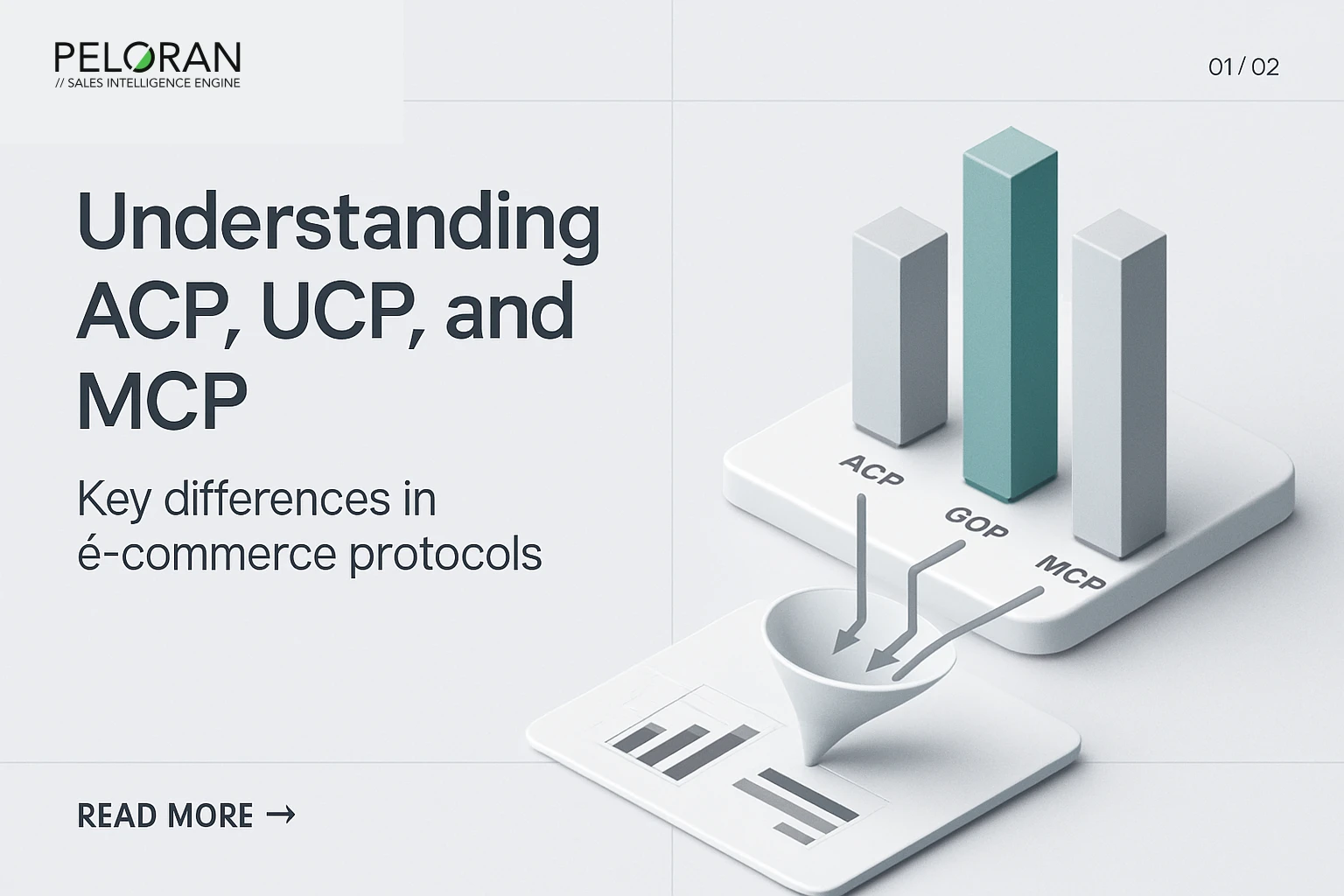
Three protocol names keep showing up in ecommerce news: ACP, UCP and MCP. They are often mentioned as if they competed with each other. They do not. Two of them are about letting an AI agent buy from your store, and one is about letting an AI tool work with your data. This article sets out who publishes each one, what it does and what a merchant should check first. The facts are current as of November 2026, and the specifications are still changing.
Key takeaways
- ACP and UCP are open standards for AI agents that shop and check out. MCP is a general standard for connecting AI applications to tools and data, and it is not a checkout protocol.
- ACP comes from OpenAI and Stripe, UCP from Google and Shopify. MCP was created by Anthropic and now sits with the Linux Foundation.
- For most stores the first job is clean product data, prices and stock, because an agent acts on what your feed says.
What each protocol is
- Agentic Commerce Protocol (ACP): An open standard co-developed by OpenAI and Stripe and announced on September 29, 2025, together with Instant Checkout in ChatGPT. It lets an AI agent start and complete a purchase while the merchant stays in control of the sale. OpenAI describes it here.
- Universal Commerce Protocol (UCP): An open standard that Google and Shopify developed with retailers such as Etsy, Wayfair, Target and Walmart, announced in January 2026. It describes how agents discover products, learn what a merchant supports and complete purchases. Shopify explains it here.
- Model Context Protocol (MCP): Introduced by Anthropic in November 2024 as an open standard for connecting AI applications to tools and data. In December 2025 Anthropic donated it to the Agentic AI Foundation, a fund of the Linux Foundation. Anthropic announced it here.
How they differ
- Purpose: ACP and UCP cover commerce and checkout. MCP covers access to tools and data and has nothing to do with payment.
- Where shoppers meet them: ACP underpins checkout in ChatGPT. UCP is used for Google's AI Mode and Gemini, and Google describes it as compatible with MCP and other agent protocols.
- Your effort: ACP and UCP are mostly handled by your commerce platform and payment provider. MCP is something you adopt when you want an AI assistant to work with your own systems, for example to read reports.
What a merchant should check first
Whichever protocol your store ends up using, an agent acts on what your catalog says. A mismatch between the feed and the store turns into failed orders.
- Product titles, attributes and prices are complete and consistent across your pages and your feeds.
- Stock is accurate at variant level, so an agent never sells a size that is gone.
- Shipping and returns rules are written down where a buyer and an agent can both find them.
- You know which protocols your platform (Shopify, WooCommerce, BigCommerce or Ecwid) and your payment provider support today. Ask them, because the specifications are still changing.
A simple decision framework
- If you sell on Shopify, read Shopify's documentation on UCP and check whether it applies to your plan and region.
- If your payments run through a provider that supports ACP, read that provider's documentation before you plan anything yourself.
- If you want AI assistants to work with your own data and tools, look at MCP-based tools.
- If none of this applies yet, spend the effort on data quality and on measuring what your offers actually add.
Where Peloran fits
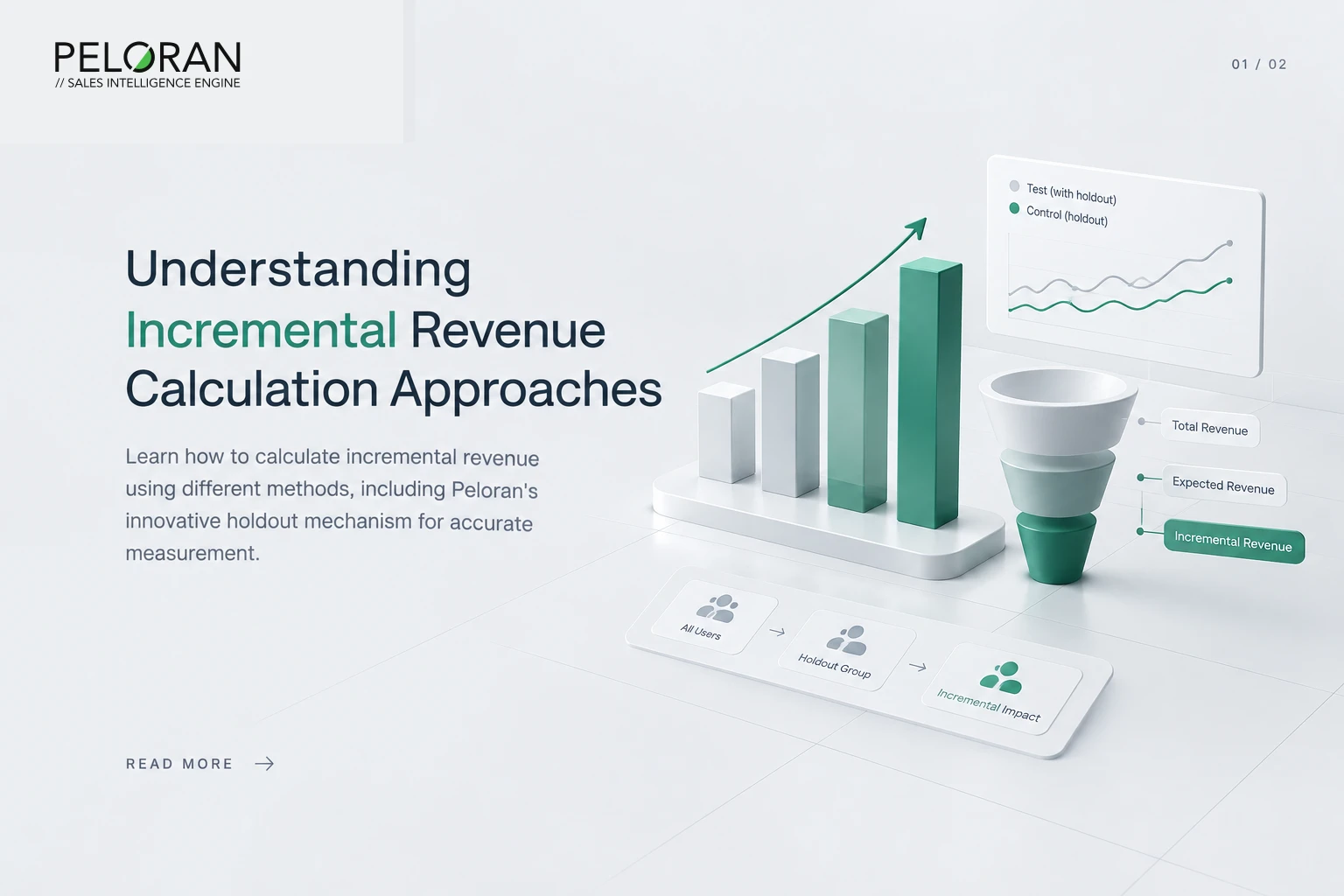
Peloran does not process checkout and does not implement ACP or UCP. Checkout stays with your platform and payment provider. What Peloran does is measure: its holdout reports show whether an on-site offer or journey adds revenue, whatever the traffic source, and you can segment by traffic source to look at visitors who arrive from AI assistants. Peloran also publishes an llms.txt file and an MCP server card for authenticated merchants. The guide to agentic commerce protocols has the reference version of this article, and the incremental revenue guide explains the holdout method.
Reading the numbers with care
Statistics about AI-referred traffic move fast and come mostly from platform and survey data. Check the date and the sample before you rely on one. For one dataset, see the agentic commerce benchmark summary, and treat any conversion comparison as context for your own test, not as a forecast for your store.
Frequently asked questions
Is MCP a checkout protocol?
No. MCP connects AI applications to tools and data. ACP and UCP are the ones aimed at commerce and checkout.
Do I have to choose between ACP and UCP?
ACP underpins checkout in ChatGPT, and UCP is used for Google's AI Mode and Gemini. Both are open standards. Your platform and payment provider decide which you can use, so check their documentation.
Does Peloran support ACP or UCP?
No. Peloran does not handle checkout. It measures what your offers add and publishes MCP and discovery files.